Skip to content
Best Cabinets
Service guide

Bathroom Cabinets & Vanities

Vanities, linen cabinets and built-in storage for rooms that see daily moisture.

Published: February 12, 2026

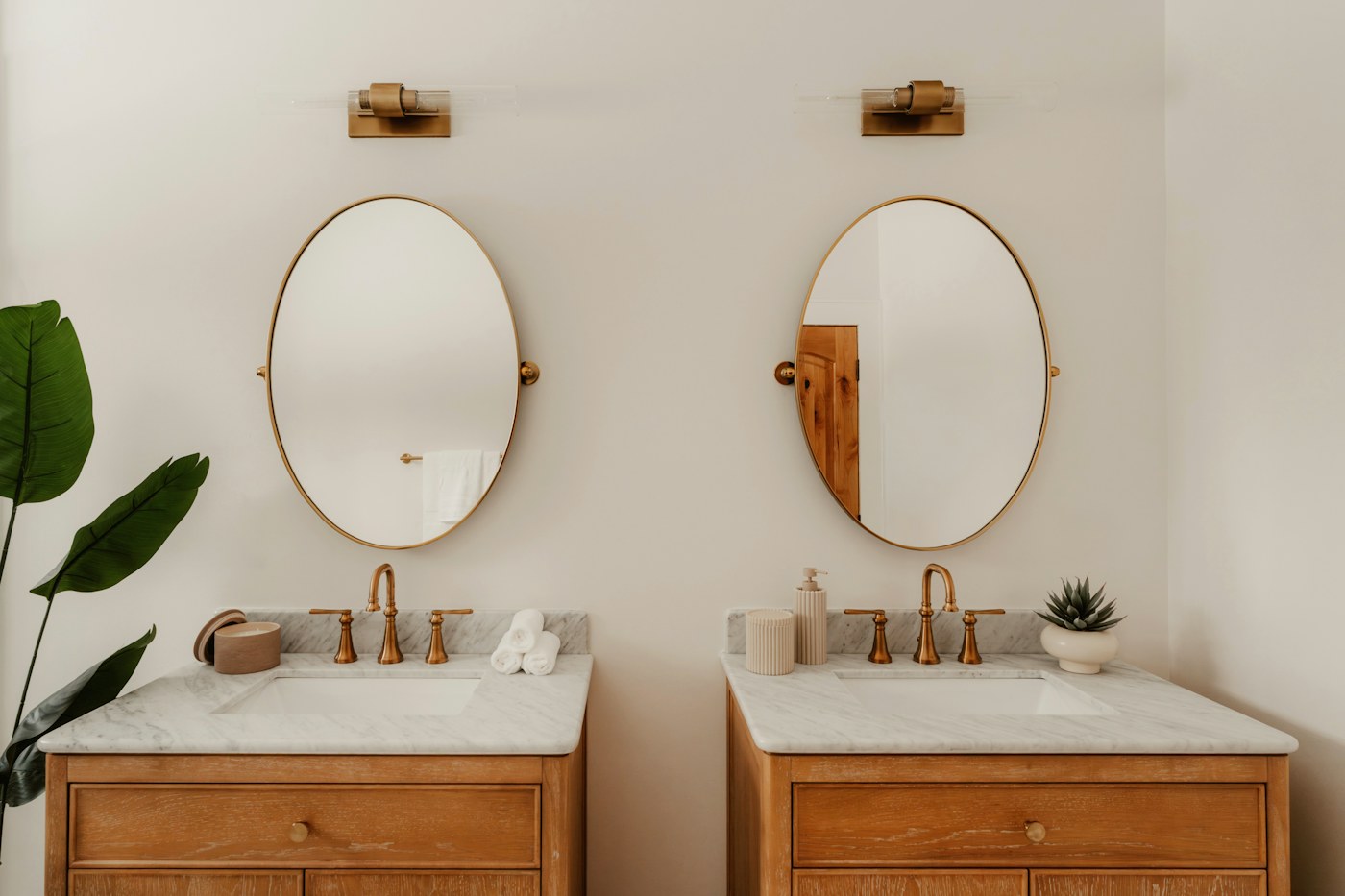
bathroom vanity with drawers

Vanities and Bathroom Storage

Bathroom cabinetry usually means a vanity, sometimes with a linen tower, medicine cabinet or built-in shelving. Vanities come as freestanding furniture-style pieces, standard cabinet boxes, or wall-hung units that leave the floor clear. Stock vanities come in set widths; semi-custom and custom work fits the wall you have.

Custom bathroom cabinets can fit storage around the room's available width and plumbing. A custom bathroom vanity also needs a coordinated plan for the sink, countertop, door swings and drawers.

Moisture Matters

Bathrooms are hard on cabinets. Plywood boxes and a durable, well-sealed finish hold up better than particleboard, which swells when water gets into it. Pay attention to the bottom edges of doors and the area around the sink, and make sure the room has a working exhaust fan.

Review how the specified materials and finishes are expected to perform in a room that sees daily moisture.

Height, Plumbing and Tops

Vanity heights vary, and taller units are now common in adult bathrooms. Drawer layouts have to work around the sink trap and supply lines. Tops are often ordered with the vanity, so confirm who is measuring and supplying them.

Confirm Before Ordering

  • Record final room and vanity measurements.
  • Confirm the sink and faucet specifications.
  • Keep plumbing accessible for installation and service.
  • Identify who measures for and coordinates the countertop.

Find Cabinet Companies Near You

Each company in our city rankings lists the services it offers. Browse all states and cities, or start with Huntsville, Nashville, Atlanta or Tampa.
Recommended Guides

plywood, MDF and solid wood samples
Types and materials

Cabinet Materials

Solid wood, plywood, MDF and particleboard, and what each is used for. Cabinet boxes are usually plywood or particleboard. Plywood is lighter, holds screws well and tolerates moisture better. Particleboard, often faced with melamine, is less expensive and stable when kept dry. Either can make a durable cabinet when it is thick enough and well assembled. Solid hardwood such as maple, oak, cherry, hickory or walnut is standard for stained doors and face frames. MDF is common for painted doors because it is smooth and does not expand and contract the way wood does, so paint is less likely to crack at the joints.

Read more
painted and stained finish samples
Types and materials

Cabinet Finishes

Painted, stained and natural finishes, and how each one wears. Painted cabinets give a solid, even color. Paint shows chips and hairline cracks at door joints more than stain does, so ask for a touch-up kit and for the name of the color. Stain adds color while leaving the grain visible; a clear coat alone shows the natural wood. Both hide wear well. Species matters: maple is smooth and even, oak has strong grain, cherry darkens with age, and walnut is naturally dark.

Read more
custom cabinets under construction in a local shop
Service guide

Custom Cabinets

Cabinetry designed and built for your home alone: what it is, how the process works, and why it fits any space. Custom cabinets are designed for a specific room and built to order. Nothing is pulled from a warehouse. The cabinetmaker measures the space, draws each cabinet, and builds it to those drawings, usually in a local shop. Because every dimension is open, custom cabinets can fit rooms that standard sizes cannot, and can be made in almost any wood, door style or finish. Because nothing is a standard size, custom cabinetry works where stock cabinets leave gaps: kitchens with odd corners, bathrooms with short walls, mudrooms, laundry rooms, home offices, closets, and the space under a staircase or a sloped ceiling. The same shop can build all of it to match, so the house reads as one design.

Read more
base cabinet with roll-out trays
Service guide

Cabinet Storage Solutions

Pull-outs, drawer organizers and pantry fittings that make cabinets easier to use. Roll-out trays, pull-out trash and recycling bins, tray dividers, spice pull-outs, corner systems and drawer organizers are the most common. Deep drawers with pegs or dividers hold pots and dishes; tall pantry cabinets take roll-out shelves. Fittings are easiest to include when cabinets are ordered, because box sizes can be planned around them. Many can also be retrofitted into existing cabinets if the opening sizes are right.

Read more
kitchen floor plan and elevations
Service guide

Cabinet Design

How cabinet layouts are planned, and what a good designer will ask you. Design turns a room's measurements into a cabinet plan: which cabinets go where, in what sizes, with what storage inside. A good plan accounts for appliance clearances, door swings, walkways and how the kitchen is actually used. Many cabinet dealers and custom shops include design in their service; independent kitchen designers charge separately. Expect questions about how you cook, what you store, and what frustrates you about the current room. You should receive a floor plan and elevations before ordering.

Read more
drawer pulls and hinges on a workbench
Service guide

Cabinet Hardware

Knobs, pulls, hinges and drawer slides, and why the parts you cannot see matter most. Decorative hardware is the easiest part of a kitchen to change. Knobs need one hole; pulls need two at a fixed spacing, so replacements have to match the existing holes unless the doors are being refinished. Choose a size in proportion to the door or drawer. Concealed, soft-close hinges are standard on most new cabinets. Drawer slides matter more: full-extension, soft-close slides let a drawer open completely and carry real weight. Ask which brands a cabinet company uses.

Read more